

In today’s hyper-connected world, IT Management Services are the backbone of modern business operations. Whether you’re running a startup, an enterprise, or a multinational corporation, efficient IT management determines how well your company performs, innovates, and scales.
This guide dives deep into the types, benefits, strategies, and real-world impact of IT management services with examples, statistics, and actionable insights to help your business stay ahead of the curve.
What Are IT Management Services?
IT Management Services refer to the planning, implementation, and monitoring of a company’s information technology systems including hardware, software, networks, cybersecurity, and data management.
In simple terms, these services ensure that all digital and technical components of your business run smoothly, securely, and efficiently.
Core Areas Covered by IT Management
| Area | Description | Examples |
| Network Management | Overseeing routers, switches, firewalls, and connectivity across all systems | LAN/WAN setup, VPNs, cloud connectivity |
| System Administration | Managing servers, operating systems, and software installations | Windows/Linux servers, Active Directory |
| Data Management | Organizing, storing, and protecting business data | Databases, backups, disaster recovery |
| Cybersecurity Management | Protecting systems against cyber threats and vulnerabilities | Firewalls, encryption, antivirus |
| Cloud Services | Managing cloud infrastructure and SaaS applications | AWS, Azure, Google Cloud |
| Help Desk Support | Providing technical assistance to employees | Ticketing systems, IT support desk |
Why IT Management Services Matter
In the digital era, IT isn’t just a department it’s the core infrastructure that supports every part of your organization. Without proper management, even minor glitches can escalate into major downtime, costing time and money.
Key Reasons IT Management Is Crucial
- Improved Efficiency: Automated processes reduce manual errors and speed up operations.
- Enhanced Security: Proactive monitoring prevents data breaches and cyberattacks.
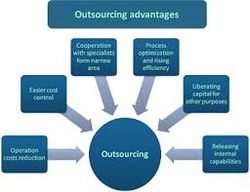
- Cost Optimization: Outsourcing IT management often saves on hiring and training costs.
- Scalability: IT services grow with your business needs — whether on-premise or cloud-based.
- Business Continuity: Backup and recovery plans keep your company running even after disruptions.
Types of IT Management Services
Let’s explore the main categories of IT management services that companies rely on today.
1. Managed IT Services
These are outsourced IT solutions offered by third-party providers, known as Managed Service Providers (MSPs). They handle daily IT tasks, updates, maintenance, and monitoring.
Examples:
- 24/7 Network monitoring
- Data backup and recovery
- Remote system management
- Security patching and software updates
Benefits:
Predictable monthly costs
Proactive issue detection
Access to advanced IT tools
2. IT Infrastructure Management
Focuses on physical and virtual infrastructure, ensuring that servers, networks, and devices remain optimized.
Includes:
- Server maintenance
- Data center operations
- Virtualization management (VMware, Hyper-V)
Impact:
- Reduces hardware downtime
- Improves system performance
- Supports hybrid and remote work models
3. Cloud Management Services
As businesses migrate to the cloud, managing multi-cloud environments becomes critical.
Functions include:
- Cloud provisioning and scaling
- Security configuration
- Cost tracking and optimization
Popular platforms: AWS, Microsoft Azure, Google Cloud
Why it matters:
Cloud management reduces operational costs and increases flexibility while maintaining top-tier security and uptime.
4. Network Management
A well-managed network ensures seamless communication and data exchange within and outside your organization.
Components:
- Bandwidth monitoring
- Firewall and VPN configuration
- Router/switch maintenance
- Network performance analytics
Results:
- Fewer network outages
- Stronger cybersecurity posture
- Enhanced remote collaboration
5. Cybersecurity Management
With increasing cyber threats, cybersecurity management is the most vital part of IT management services.
Key areas:
- Threat detection and prevention
- Security compliance audits
- Identity and access management (IAM)
- Employee cybersecurity training
Stats to consider:
According to IBM’s 2024 report, the average cost of a data breach reached $4.45 million globally.
Pro tip: Regular vulnerability assessments and penetration testing help identify weak points before hackers do.
6. IT Support & Help Desk Services
An efficient help desk keeps employees productive and systems stable.
Support levels:
| Support Level | Description | Example |
| Level 1 (L1) | Basic troubleshooting and password resets | User login issues |
| Level 2 (L2) | Advanced system or software troubleshooting | Network or software bugs |
| Level 3 (L3) | Expert-level issue resolution | Database corruption, critical errors |
Benefits:
- Quick problem resolution
- Enhanced user satisfaction
- Reduced downtime
In-House vs. Outsourced IT Management
Companies often debate whether to manage IT internally or outsource it to experts.
| Factor | In-House IT | Outsourced IT |
| Cost | High due to salaries, tools, training | Predictable subscription model |
| Expertise | Limited to internal staff | Access to diverse specialists |
| Availability | Business hours | 24/7 monitoring |
| Scalability | Slower due to hiring constraints | Quick and flexible scaling |
| Security Compliance | Must ensure own compliance | Provider ensures certifications (ISO, SOC2) |
Verdict:
For small and mid-sized businesses, outsourcing IT management is often more cost-effective and technically superior. Large enterprises, however, may prefer hybrid models combining internal teams with MSPs.
Benefits of Effective IT Management Services
A strategic IT management approach delivers measurable business outcomes.
1. Increased Operational Efficiency
Automated workflows and continuous monitoring minimize disruptions and maximize productivity.
2. Enhanced Security and Compliance
Regular audits and advanced security tools help meet GDPR, HIPAA, and ISO standards.
3. Predictable IT Costs
With managed services, companies can budget more effectively and avoid unexpected expenses.
4. Better Decision-Making with Analytics
Data-driven IT dashboards provide real-time insights into performance, user activity, and resource allocation.
5. Business Continuity and Disaster Recovery
Comprehensive backup solutions ensure that operations resume quickly after data loss or cyberattacks.
Emerging Trends in IT Management
As technology evolves, so do IT management strategies. Let’s explore the top trends shaping 2025 and beyond.
1. AI and Automation
AI is transforming IT operations through predictive analytics, self-healing systems, and automated troubleshooting.
Example: AI-driven monitoring tools detect anomalies before they impact users.
2. Cloud-Native Management
Businesses are moving towards multi-cloud and hybrid environments, demanding advanced orchestration tools for unified visibility.
3. Zero-Trust Security Models
“Never trust, always verify” Zero-trust frameworks ensure every access request is authenticated, even within internal systems.
4. Remote Work Infrastructure
With remote work now mainstream, companies must manage distributed networks securely via VPNs, cloud-based collaboration tools, and endpoint management.
5. Green IT and Sustainability
Eco-friendly data centers, virtualization, and energy-efficient hardware are helping businesses reduce carbon footprints while saving costs.
Challenges in IT Management
Even with modern tools, IT management isn’t without hurdles.
| Challenge | Description | Possible Solution |
| Cybersecurity Threats | Increasing malware, phishing, and ransomware attacks | Use AI-based threat detection and zero-trust security |
| Data Overload | Managing massive data sets efficiently | Implement data governance and cloud analytics |
| Talent Shortage | Difficulty hiring skilled IT staff | Partner with Managed Service Providers (MSPs) |
| Compliance Risks | Changing global data privacy laws | Conduct regular audits and compliance checks |
| Budget Constraints | Rising IT costs amid inflation | Optimize cloud usage and prioritize automation |
Best Practices for Effective IT Management
1. Adopt Proactive Monitoring
Don’t wait for issues to occur. Continuous monitoring detects anomalies before they cause downtime.
2. Create Strong Backup Policies
Use the 3-2-1 rule: keep 3 copies of data, on 2 different media, with 1 stored offsite.
3. Standardize IT Policies
Establish clear rules for data access, password management, and device usage.
4. Regular Security Training
Human error causes 95% of cybersecurity breaches — train your employees regularly.
5. Leverage Automation
Automate repetitive IT tasks like patch updates, ticket routing, and system health checks.
6. Align IT Goals with Business Strategy
Ensure IT decisions support the company’s broader business objectives not just technical performance.
Case Study: How Managed IT Services Transformed a Retail Company
Background:
A mid-sized retail chain with 25 locations faced recurring server crashes and cybersecurity breaches.
Challenges:
- Outdated hardware and software
- Lack of monitoring tools
- Inefficient in-house IT support
Solution:
They partnered with a Managed IT Service Provider to implement:
- Cloud-based POS systems
- 24/7 network monitoring
- Cybersecurity training and firewall setup
Results (After 6 Months):
| Metric | Before | After |
| Downtime per month | 8 hours | 45 minutes |
| Security incidents | 12 | 1 |
| IT costs | $25,000/month | $18,000/month |
| Employee productivity | +15% | +28% |
Conclusion:
Outsourcing IT management improved system reliability, security, and profitability proving how strategic IT management drives real business value.
Choosing the Right IT Management Partner
Selecting the right IT service provider can make or break your digital success.
Checklist for Selecting an IT Partner
Proven industry experience
24/7 monitoring and response
Transparent pricing model
Certified professionals (CompTIA, Microsoft, Cisco)
Compliance with ISO/IEC 27001
Positive client testimonials
Tip: Always request a Service Level Agreement (SLA) detailing uptime guarantees, response times, and responsibilities.
Future of IT Management Services
By 2030, AI-driven IT operations (AIOps), cyber resilience, and quantum-safe security will redefine the industry.
Businesses that adopt these early will gain a competitive edge in innovation, cost-efficiency, and customer trust.
Gartner predicts that by 2027, over 75% of global enterprises will use AI-powered IT management tools to optimize their infrastructure
FAQs
What do IT management services include?
They include network monitoring, cloud management, cybersecurity, help desk support, and data backup solutions.
Are IT management services expensive?
Not necessarily. Outsourcing often lowers operational costs compared to maintaining a full in-house IT department.
Can small businesses benefit from IT management?
Absolutely. Small businesses gain access to enterprise-level tools, expertise, and 24/7 monitoring without large upfront costs.
What’s the difference between IT support and IT management?
IT support focuses on fixing issues, while IT management involves proactively planning, optimizing, and securing systems.
Is cloud-based IT management secure?
Yes with proper encryption, access control, and monitoring, cloud management can be even safer than traditional on-premise systems.
Conclusion
Effective IT Management Services are no longer optional they’re a strategic necessity for any business operating in the digital age.
From improving efficiency and strengthening security to driving innovation and ensuring scalability, IT management lays the foundation for growth and resilience.
Whether you choose to manage your systems internally or partner with a Managed Service Provider, the key is to stay proactive, data-driven, and security-conscious.