

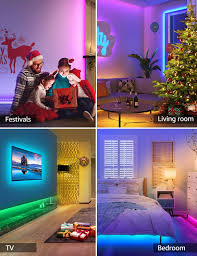
In today’s world of energy efficiency and sustainable solutions, LED lights have become a household name. But what exactly do LED lights stand for? The term LED stands for Light Emitting Diode a revolutionary technology that has transformed the way we illuminate our homes, offices, and cities.
This article explores the meaning of LED lights, their advantages, applications, and why they dominate the lighting industry. If you’ve ever wondered about what LED lights stand for and why they’re important, you’re in the right place.
What Do LED Lights Stand For?
- LED = Light Emitting Diode
- A diode is a semiconductor device that allows current to flow in one direction only.
- When electricity passes through the diode, it emits light as a result of electroluminescence.
Unlike traditional bulbs, LED lights don’t rely on heating filaments to produce light. This makes them far more efficient, durable, and eco-friendly.
History of LED Lights
| Year | Development |
| 1907 | Electroluminescence discovered by H.J. Round |
| 1962 | First practical red LED developed by Nick Holonyak Jr. |
| 1990s | Bright blue and white LEDs invented |
| 2000s | LEDs adopted in homes and businesses |
| Present | LEDs dominate the global lighting market |
Why Are LED Lights Important?
LED lights are not just a modern invention they’re a game changer. They provide:
- Energy savings of up to 80% compared to incandescent bulbs.
- Long lifespan of 25,000–50,000 hours.
- Eco-friendly lighting with no harmful mercury.
- Brighter illumination with less energy.
Advantages of LED Lights
| Feature | LED Lights | Incandescent | Fluorescent |
| Energy Efficiency | High (80–90% savings) | Very Low | Moderate |
| Lifespan | 25,000–50,000 hrs | 1,000 hrs | 8,000–10,000 hrs |
| Heat Emission | Very Low | High | Moderate |
| Eco-Friendliness | No mercury, recyclable | Wasteful | Contains mercury |
| Initial Cost | Higher | Low | Moderate |
Different Types of LED Lights
- Miniature LEDs – Used in remote controls, small devices.
- High-Power LEDs – Found in streetlights, headlights.
- RGB LEDs – Provide color-changing lights for decoration.
- Surface Mounted Device (SMD) LEDs – Bright, efficient, common in panels.
- COB LEDs (Chip on Board) – High illumination, used in floodlights.
Applications of LED Lights
Residential Use
- Ceiling lights, downlights, strip lights
- Energy-efficient home lighting
Commercial Use
- Office lighting, signage, billboards
- Retail shop illumination
Industrial Use
- Streetlights, warehouse lighting
- Security floodlights
Automotive Use
- Headlights, taillights, interior lights
Decorative Use
- Stage lighting, events, Christmas decorations
LED Lights vs Other Lighting Technologies
| Aspect | LED | CFL | Incandescent |
| Energy Savings | 80–90% | 60–70% | None |
| Warm-up Time | Instant | Delayed | Instant |
| Environmental Impact | Eco-friendly | Contains mercury | High carbon footprint |
| Durability | Shock resistant | Fragile | Fragile |
Environmental Benefits of LED Lights
- Reduce carbon footprint.
- Consume less energy from power plants.
- No toxic chemicals like mercury.
- 100% recyclable materials.
How LED Lights Save Money
- Lower energy bills: LEDs cut electricity costs.
- Longer lifespan: Fewer replacements needed.
- Low maintenance: Durable, shockproof, and heat-resistant.
Example Calculation
If a 60W incandescent bulb costs $10/month in electricity, the same brightness with an LED (10W) costs only $1.6/month. That’s over 80% savings!
Innovations in LED Technology
- Smart LED bulbs with Wi-Fi/Bluetooth.
- Solar-powered LEDs for sustainable outdoor use.
- Human-centric lighting that mimics natural daylight.
- OLEDs (Organic LEDs) in TV screens and displays.
Disadvantages of LED Lights
Although LED lights are highly beneficial, they do have some drawbacks:
- Higher upfront cost (though prices are dropping).
- Temperature sensitivity – performance can reduce in extreme heat.
- Quality variation – cheap LEDs may flicker or emit poor light.
Future of LED Lighting
- Dominating smart cities with connected lighting systems.
- Increased use in healthcare and horticulture.
- Integration with AI and IoT for intelligent energy management.
FAQs
What does LED stand for?
LED stands for Light Emitting Diode, a semiconductor device that emits light when current passes through it.
Are LED lights better than fluorescent bulbs?
Yes, they last longer, save more energy, and are eco-friendly compared to fluorescents.
Do LED lights save electricity?
Absolutely. They consume up to 80% less power than traditional bulbs.
How long do LED lights last?
Typically 25,000 to 50,000 hours, depending on usage and quality.
Are LED lights harmful to the eyes?
High-quality LEDs are safe. Poor-quality ones may cause strain due to flickering.
Conclusion
So, what do LED lights stand for? They stand for Light Emitting Diodes, but in practice, they stand for so much more efficiency, sustainability, and the future of lighting. From homes to highways, LEDs are revolutionizing illumination across the world.
Investing in LED lighting is not only good for your wallet but also for the planet. As technology evolves, LED lights will continue to shine brighter, last longer, and reduce our energy footprint.